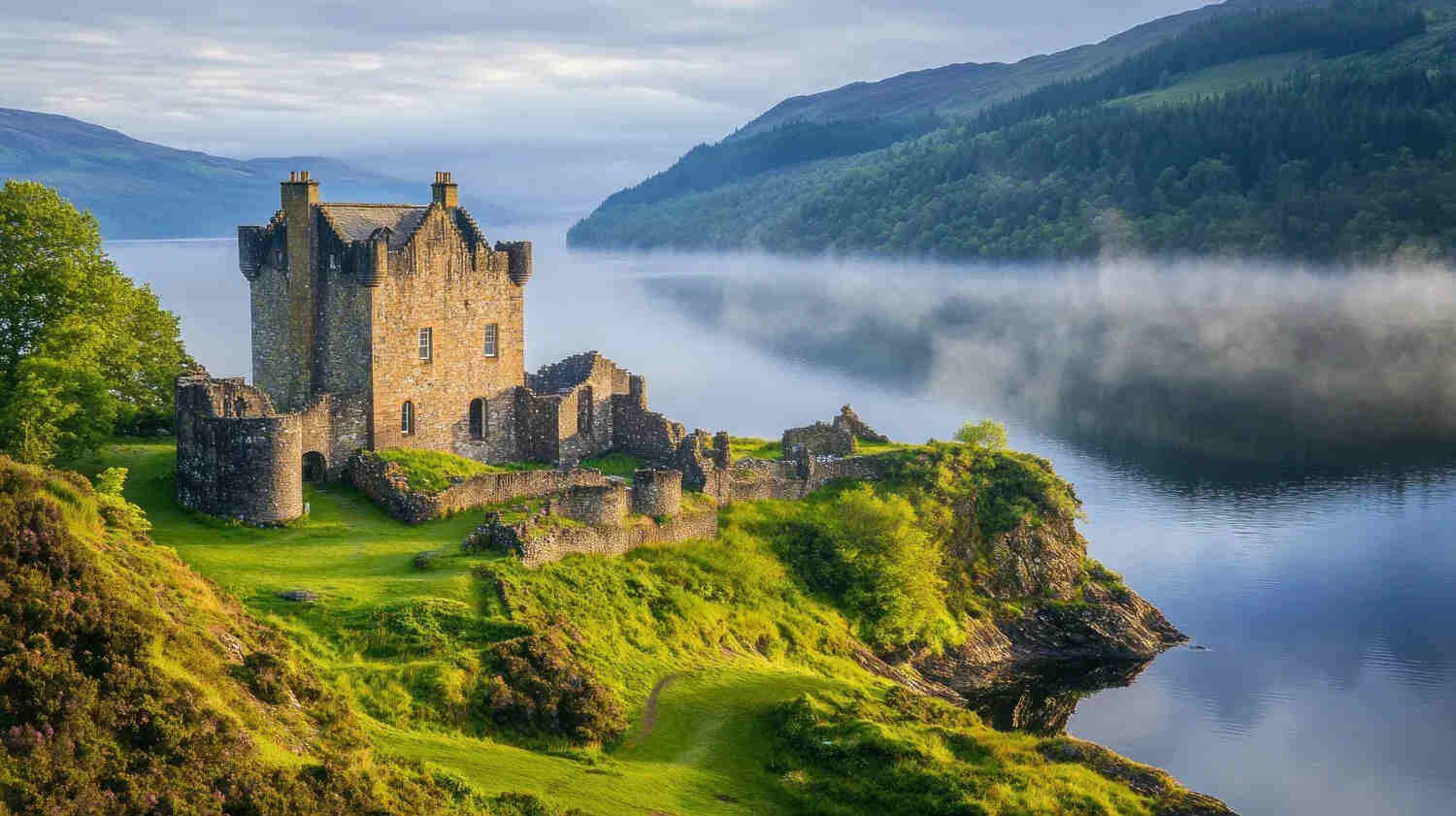
Loch Ness, Glencoe and Skye get most of the attention. The Highlands have plenty more to see. Small villages, waterfalls, quiet lochs, and nature reserves offer a different way to explore the region.
Some places in this guide are well known. Others stay quieter. Each one is worth a stop on your trip.
Quiet Villages and Coastal Places
Dingwall
Dingwall in the Scottish Highlands is a historic town north of Inverness. The town became a Royal Burgh in 1226 and has links to Pictish and Norse history. Walk through the town centre, then head towards the Cromarty Firth to enjoy the coastal views.
The Black Isle
Despite the name, the Black Isle is a peninsula, not an island. You find farmland, small villages and water views. Cromarty is a good stop if you like local history.
Shieldaig
Shieldaig is a small village in Wester Ross. Boats and houses line the waterfront, with views across Loch Shieldaig. Take a short walk along the shore before you drive on to Torridon.
Applecross
Applecross sits on the northwest coast and is already popular with visitors looking for hidden gems in Scotland. The Bealach na Bà road climbs through the mountains to reach the village and gives you wide views on clear days. The road has steep slopes, sharp bends and narrow single-track sections. Drivers unfamiliar with these roads should take care. Large motorhomes and caravans should choose another route.
Plockton
Plockton sits beside a sheltered bay on the west coast. You see boats, sea views and palm trees in some gardens. Stroll along the waterfront, then visit nearby Loch Carron.
Waterfalls, Lochs and Nature Reserves
Rogie Falls
Rogie Falls is near Contin, north of Inverness, and is one of the best places to visit in Scotland for nature lovers. A short woodland trail leads to the Black Water, where a suspension bridge offers views of the falls. The shortest trail is about 0.8 km and includes a steep slope. Visit after rain to see more water flowing over the rocks. In late summer and autumn, you may also see wild salmon jumping upstream.
Beinn Eighe National Nature Reserve: Beinn Eighe has ancient pinewoods and mountain scenery. The mountain trail is just over 6 km and takes three to four hours. Pack water and snacks.
Torridon: Torridon has steep mountains, deep valleys and many walking routes. In August 2026, Torridon became Scotland’s newest National Nature Reserve.
Falls of Measach
The falls sit inside Corrieshalloch Gorge, near Ullapool. The River Droma drops about 45 metres into the gorge. A short walk takes you to a suspension bridge and viewing platform. The bridge dates from 1874. The gorge has steep drops, so stay on marked paths.
Loch Maree
Mountains and woodland surround Loch Maree, a freshwater loch with more than 60 islands. Stop at the viewpoints, take a short walk, or enjoy the view from a safe parking area.
Falls of Foyers
The falls are on the south side of Loch Ness. A woodland path leads to the waterfall as it drops through a deep gorge. Along the way, you also get views of the loch.
Glen Affric
Glen Affric has native pinewoods, lochs and mountain views. Walking routes of different lengths start across the glen, so you pick one to match your time and energy.
How to Plan a Route Around the Highlands
Distances look short on a map, but Highland roads are slow. Many are narrow, and you will want to stop for photos and walks. Pick two or three nearby places for each day instead of trying to see everything.
Here are three routes to start with:
Around Inverness: Rogie Falls, Dingwall and the Black Isle.
Around Wester Ross: Shieldaig, Torridon, Beinn Eighe and Loch Maree.
Around Loch Ness: Falls of Foyers and nearby viewpoints.
Grouping stops saves driving time and leaves space for walking and meals. Start with the places you want to see most, then add stops along the same road.
When to Visit and What to Know Before You Go
Each season brings something different to the Scottish Highlands. Spring has fresh greenery and longer days. Summer gives you more daylight for sightseeing and walks. Autumn brings colour to the forests and hills, while winter brings snow to higher ground and makes driving more difficult.
The weather can change at any time of year. Check the forecast before setting out for a walk or scenic drive.
Things to remember before your trip:
- Drive carefully on single-track roads and use passing places for other vehicles.
- Pack waterproof clothing, warm layers and comfortable walking shoes.
- Save offline maps before entering areas with poor phone signals.
- Leave extra time for driving and walking stops.
Cycling in the Scottish Highlands
Quiet roads and wild scenery make the Highlands a great place to explore by bike. However, steep hills and changing weather can make rides harder. Plan your route, check the forecast and wear a helmet. Carry water, spare layers and a repair kit.
Go Highlands Tours is the best off-road biking partner in the North Highlands for visitors who want to explore the region on guided off-road cycling tours with an experienced guide.
FAQs
Q1. What are some quieter places to visit in the Scottish Highlands?
Try Rogie Falls, Shieldaig, Loch Maree and Falls of Foyers. You get waterfalls, water views and time outdoors without the biggest crowds.
Q2. Is one day enough to see the Highlands?
One day is enough for a small area. Pick two or three nearby stops, such as Rogie Falls, Dingwall and the Black Isle.
Q3. What is the best time to visit the Scottish Highlands?
Summer gives you the longest days. Spring and autumn bring good scenery. Winter needs extra care on the roads.
Q4. What should you pack for a Highland road trip?
Bring waterproof clothing, warm layers, walking shoes, water and snacks. Download offline maps before you head into remote areas.
Q5. Does GoHighlands Tours plan Highland itineraries?
Yes. GoHighlands Tours builds a route around your interests and the time you have.
